9th BigBrain Workshop: Celebrating 5 Years of Successful HIBALL Collaboration
Berlin, Germany — The 9th BigBrain Workshop (27–29 October 2025) in Berlin brought together the HIBALL and BigBrain communities to explore the frontiers of ultra-high-resolution, multimodal brain data, modelling, and mapping; to celebrate the successful completion and remarkable achievements of the HIBALL initiative; and to discuss how to maintain momentum and further strengthen the collaboration between European and Canadian neuroscience.
The discussions in Berlin made clear that there is a strong commitment to expanding these scientific connections grown over the years of collaboration in HIBALL. During the project, researchers not only advanced research on data and tools around the BigBrain but also forged digital bridges between research infrastructures — linking Europe’s EBRAINS platform with Canadian initiatives such as HBHL (Healthy Brains, Healthy Lives) and CBRAIN.
Otmar Wiestler, President of Germany’s Helmholtz Association between 2015 and 2025, named HIBALL a prototypical model of successful EU–Canadian collaboration and compellingly argued for the strengthening of such links across the Atlantic in a speech “The World in Motion: Why Transatlantic Scientific Cooperation Matters”.
At its core, the meeting featured a packed programme of scientific presentations and discussions by the research community around the BigBrain model, an ultrahigh-resolution model of the entire human brain that is a part of the EBRAINS multi-level human brain atlas (siibra explorer). With over 100 scientists onsite and 50 online, the topics ranged from fine-scale mappings of neuroanatomical structures in never-before-seen detail, to new mapping tools from neuroinformatics and AI, like HippoMaps, CellDetection, and CytoNet.
Highlights also included the Sievers lecture given by Kâmil Uludağ from the University of Toronto, who showed how computational modelling can improve the precision of neuroimaging; and a keynote on medical applications given by Andreas Horn from the University Hospital of Cologne and Mass Brigham General in Boston. He showed how much millimetres matter when it comes to helping Parkinson’s patients using electrical stimulation of target structures in the brain, so-called Deep Brain Stimulation. Pioneers in the field like him look to brain atlases that offer neuroanatomy of the highest possible resolution.
As always, the event also looked beyond. Helen Zhou from the National University of Singapore gave the Educational lecture of the HBHL training day, which preceded the workshop. Richa Verma from Indian Institute of Technology in Madras presented the DHARANI project, which creates a three-dimensional histological cell atlas of the developing human brain. Katy Börner, Indiana University USA and Visiting Fellow, Stiftung Charité Berlin, showed the HuBMAP Human Reference Atlas (HRA) for the healthy human body. All in all, the program featured speakers from 14 countries, reflecting the growing global network of collaborative brain research around shared digital resources and methods.
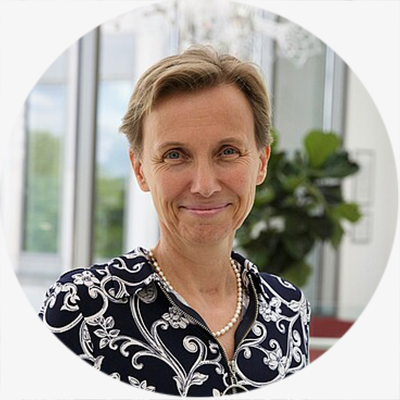
“The EU and Canada have ideal conditions for increased cooperation. Now is the time to deepen our ties even more”, said Katrin Amunts. “I look forward to working with all of you on this!” HIBALL co-leader Alan Evans added that "In this era of expanding global scientific cooperation and AI technology, HIBALL is ideally placed to promote the wider participation of the Global South in advanced brain research, the so-called 'democratisation' of neuroscience, so that issues of direct relevance to these regions can be addressed."
Both thanked all participants and this year's local host, the Berlin Institute of Health. The Berlin meeting will be followed up in autumn 2026 with the 10th BigBrain Workshop in Montreal.